How to inject a GLP-1 at home
A GLP-1 is injected under the skin once a week, into the abdomen, thigh, or upper arm, rotating the site each time. The needle is short and fine, and most people describe it as far less than they expected. Pick a consistent day, inspect the medication first, put the used device straight into a sharps container, and follow the instructions supplied with your own product.
Does it hurt? The honest answer
Injection anxiety stops more people from starting than side effects do, so this goes first. A GLP-1 is a subcutaneous injection, meaning it goes into the fat layer just under the skin, not into muscle and not into a vein. The needles are short and very fine, and in a pen device the needle is usually hidden from view entirely.
Most people describe a brief sting or a pinch, and a good number describe feeling almost nothing. Some report a stinging sensation as the medication goes in, which passes. Mild redness, itching, or soreness at the site can happen and is usually short lived. It is genuinely not comparable to a blood draw or a vaccination in the arm.
- The first one is the worst one, almost entirely because of anticipation. Weeks two onward are a two minute chore.
- Ask to be shown. The Wegovy label directs that patients be trained on proper injection technique before starting, and there is no prize for working it out alone. Your provider can walk you through it.
- Do not inject into skin that is tender, bruised, red, or hard, or into scars or stretch marks. The Wegovy instructions say this explicitly, and it is also where injections hurt most.
- Relax the area. A tense muscle underneath a site makes the whole thing sharper than it needs to be.
Where to inject, and how to rotate
Both the Wegovy and Zepbound labels give the same three sites: the abdomen, the thigh, and the upper arm. The Wegovy label notes that the injection site can be changed without adjusting the dose, and the Zepbound label says to rotate injection sites with each dose.
| Site | Where exactly | Notes |
|---|---|---|
| Abdomen | The lower stomach, keeping a couple of inches clear of the belly button | The most commonly used site and the easiest to reach yourself. There is usually plenty of area to rotate within |
| Thigh | The front of the upper leg, in the fleshy part | Easy to see and reach. Some people find it more sensitive than the abdomen |
| Upper arm | The back of the upper arm | Both product instructions have another person give the injection here, because it is awkward to do well one handed |
Injection sites from the FDA prescribing information for Wegovy (semaglutide) and Zepbound (tirzepatide). Follow the Instructions for Use supplied with your own product, which may differ, particularly for a compounded vial and syringe.
Rotation is the part people get lazy about, and it is what keeps the tissue healthy over months and years of weekly injections. Both product instructions make the same point: you may use the same area of your body each week, but do not use the same spot. A simple approach is to picture the area as a small grid and move one square along each week, or to alternate left and right sides.
The injection, step by step
This is the shape of it for a weekly pen. The exact buttons, caps, and clicks differ between devices, and a compounded vial and syringe works differently again, so this is the pattern rather than your instructions.
- Gather what you need. The pen or vial and syringe, an alcohol swab or soap and water, a cotton ball or gauze pad, and a sharps disposal container.
- Wash your hands.
- Check the medication and the device. Confirm the name, the dose, and the expiry date, and that nothing looks damaged. The Wegovy label says to use it only if the solution is clear, colorless, and free of particles. The Zepbound label says it should be clear and colorless to slightly yellow, and not to use it if there is particulate matter or discoloration.
- Choose your site and clean it. Wipe with an alcohol swab or wash with soap and water, and do not touch the spot after cleaning.
- Give the injection as your device instructs. Pen devices are typically held firmly against the skin until you hear or see the completion signal, which takes a few seconds. Do not remove it early.
- Check the dose was delivered. Most pens have a visible indicator. If you are unsure, do not inject again. Contact your provider or the pharmacy.
- Dispose of it immediately in a sharps container, and note the date so next week is easy.
Never share a pen, needle, or syringe with anyone, even if the needle is changed. Never reuse a single-dose device. If you are unsure at any point, stop and call your provider or pharmacy rather than guessing.
Timing, your weekly day, and storage
Both medications are taken once weekly, at any time of day, with or without meals. Picking a fixed day and sticking to it is the single easiest way to avoid missed doses, and a lot of people choose a day where the following 48 hours are quieter, since that is when digestive symptoms are most likely.
- Changing your day is different for the two molecules. The Zepbound label allows the day of weekly administration to be changed as long as there are at least 3 days (72 hours) between two doses. The Wegovy label states that the time of day and injection site can be changed without dose adjustment, and its missed dose rule turns on a 2 day (48 hour) window. Ask your provider before shifting your day.
- Set a recurring reminder on the day you have chosen, and keep a note of the date and site used.
- Do not double up to make up for a missed dose. The missed dose rules differ between semaglutide and tirzepatide, and they are set out on semaglutide dosage and tirzepatide dosage.
| Product | Refrigerated storage | Out of the refrigerator |
|---|---|---|
| Wegovy (semaglutide) pen | 36F to 46F (2C to 8C). Do not freeze, and protect from light | If needed, prior to cap removal, the pen can be kept from 46F to 86F (8C to 30C) for up to 28 days. Throw the pen away if it has been frozen, exposed to temperatures above 86F, or out of the refrigerator for 28 days or longer |
| Zepbound (tirzepatide) pen | 36F to 46F (2C to 8C), in the original carton | Each single-dose pen can be stored at room temperature up to 86F (30C) for up to 21 days. If stored at room temperature it should not be returned to the refrigerator, and it should be discarded if not used within 21 days |
| Compounded semaglutide or tirzepatide | Follow the storage instructions supplied by your pharmacy | Compounded products are not FDA-approved and may be supplied in different presentations and concentrations, so the brand storage windows above do not necessarily apply to yours |
Storage information from the FDA prescribing information for Wegovy and Zepbound. Labeling is updated over time, so check the instructions supplied with your own product.
On the common tip about letting it come to room temperature first: the Zepbound instructions state plainly that it is not necessary to warm the pen to room temperature, and neither label requires warming. Some people do find a very cold injection more noticeable and prefer to let the device sit out for a few minutes before injecting. If you do that, never use heat, never leave it out longer than your own storage instructions allow, and remember that a Zepbound pen taken out to room temperature is not meant to go back in the refrigerator.
Afterwards, and the small things that worry people
Most of what unsettles a new injector is normal and documented in the manufacturer instructions:
| What you see | What it means | What to do |
|---|---|---|
| A drop of liquid on the needle tip before injecting | The Zepbound instructions say a drop of liquid on the tip of the needle is normal | Do not touch the needle. Carry on |
| A drop of liquid or blood on your skin afterwards | Normal, and covered in both product instructions | Press a cotton ball or gauze pad over the site. Do not rub it |
| A small bruise | Common with any subcutaneous injection, particularly if you clipped a small vessel | Nothing to do. Choose a different spot next week and avoid injecting into bruised skin |
| Air bubbles in a pen | The Zepbound instructions say air bubbles are normal | Nothing to do. Follow your device instructions |
| Mild redness, itching, or soreness at the site | Injection site reactions are a commonly reported effect | Rotate sites properly. Mention it at your check-in if it is persistent |
| Spreading redness, swelling, a rash, or trouble breathing | Not an ordinary site reaction | Seek medical attention. Swelling of the face, lips, tongue, or throat or difficulty breathing is emergency care |
| You are not sure the full dose went in | Pens usually have a visible indicator that the dose was delivered | Do not inject a second dose. Contact your provider or pharmacy for instructions |
Drawn from the manufacturer Instructions for Use in the FDA prescribing information for Wegovy and Zepbound. Your own device instructions take precedence.
Used pens, needles, and syringes go straight into an FDA-cleared sharps disposal container immediately after use, never into household trash and never down the toilet. If you do not have one, the FDA describes using a heavy-duty plastic household container with a tight-fitting, puncture-resistant lid that is upright, stable, leak resistant, and labelled as hazardous. When it is nearly full, follow your state and community rules for disposal. Keep it out of reach of children.
Follow the instructions for your product, not a video
This is the part that matters most and gets the least attention. Compounded medications are supplied in different presentations and different concentrations to the brand pens, which means a video of somebody dialling a dose on a Wegovy pen may have nothing to do with the vial and syringe in your refrigerator. The number on your prescription, the instructions in your box, and your provider's directions are the only three sources that apply to you.
- A free consultation with a health specialist, with no obligation to buy
- A US-licensed provider who sets your dose and gives you directions for your specific product
- Medication compounded by a state-licensed US pharmacy, with the instructions for use supplied with it, shipped free and discreetly
- Provider check-ins every four weeks, so questions about technique, sites, or storage have somewhere to go
At Expert Health, compounded semaglutide starts at $199 per month ($597 for a 3-month supply) and compounded tirzepatide at $332 per month ($997 for a 3-month supply).
Compounded medications are not FDA-approved, meaning the FDA has not reviewed them for safety, effectiveness, or quality before they are dispensed. Never inject a product that did not come from a licensed pharmacy on a prescription, and never use anything sold as a research chemical or labelled not for human use.
Frequently asked questions
Where do you inject a GLP-1?
Does injecting a GLP-1 hurt?
Do I need to rotate injection sites?
What day should I take my weekly injection?
Does a GLP-1 need to be refrigerated?
Should I let my GLP-1 come to room temperature before injecting?
What do I do if I see a drop of liquid or blood after injecting?
How do I dispose of used GLP-1 pens and needles?
Sources
- Wegovy (semaglutide) injection, Prescribing Information · U.S. Food and Drug Administration
- Zepbound (tirzepatide) injection, Prescribing Information · U.S. Food and Drug Administration
- Safely Using Sharps (Needles and Syringes) at Home, at Work and on Travel · U.S. Food and Drug Administration
Content is provided for educational purposes only and does not constitute medical advice. Mention of a medication or substance does not indicate that it is available through Expert Health. Treatment availability and eligibility are determined by licensed healthcare professionals and applicable regulations. This article is for general educational purposes and is not medical or legal advice. Statements have not been evaluated by the FDA, and treatments referenced are not intended to diagnose, treat, cure, or prevent any disease. Compounded medications are not FDA-approved. Individual results vary. Always consult a licensed provider before starting any treatment.
Explore weight-loss treatments
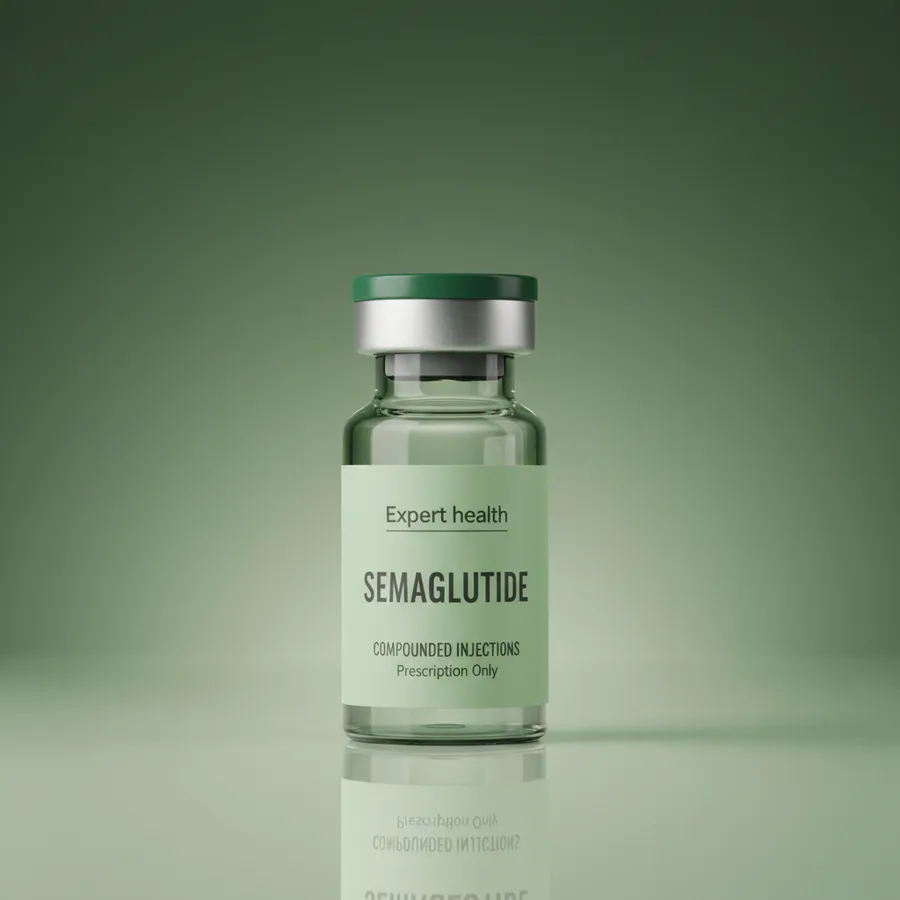
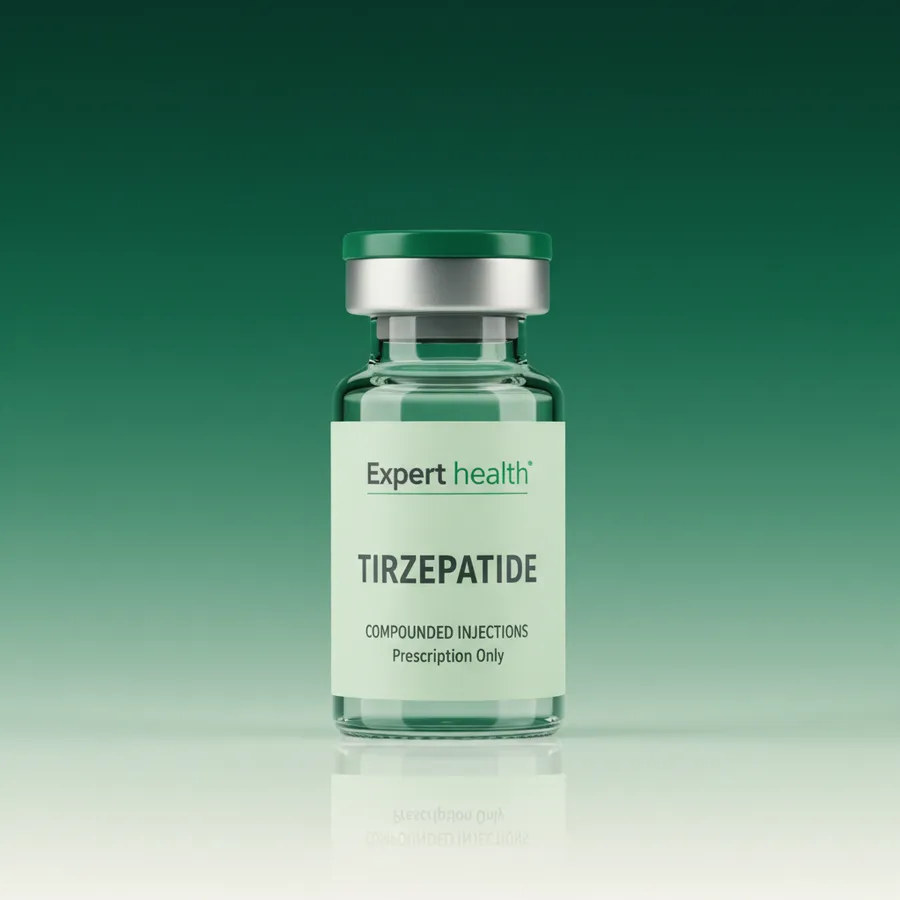
Product images are for illustrative purposes only. Actual medication vials, packaging, pharmacy labels and branding may vary. Expert Health facilitates access to care but does not compound, manufacture or dispense prescription medications. Medications are fulfilled by independent licensed pharmacies where legally permitted.
Start with Semaglutide.
As low as $199/mo. Prescribed by a US-licensed provider, compounded by a licensed US pharmacy, and shipped free to your door.
See Semaglutide and pricingNot sure it is the right fit? Speak with a health specialist, free, or browse all treatments.