What are the side effects of tirzepatide?
Tirzepatide side effects are mostly gastrointestinal. Nausea, diarrhea, vomiting, and constipation are the ones reported most often, and the FDA label notes they mostly occur during dose escalation and decrease over time. Less common but serious risks include pancreatitis and gallbladder disease. The brand labels carry a boxed warning for thyroid C-cell tumors, and tirzepatide is contraindicated with a personal or family history of medullary thyroid carcinoma or MEN 2.
Which tirzepatide side effects are most common?
The FDA prescribing information for Zepbound (tirzepatide) lists the reactions reported most often in its trials. As with any GLP-1 medication, the digestive tract dominates the list:
| Side effect | How often it is reported | What it usually looks like |
|---|---|---|
| Nausea | Most commonly reported | Concentrated in the dose-escalation phase, easing as each dose settles |
| Diarrhea | Commonly reported | Often intermittent, and often worse after fatty meals |
| Vomiting | Commonly reported | Usually follows large, rich, or rushed meals |
| Constipation | Commonly reported | Frequently linked to eating and drinking less overall |
| Abdominal pain, indigestion, reflux, burping | Commonly reported | The stomach empties more slowly, so food sits longer |
| Injection site reactions, fatigue, hair loss | Commonly reported | Site reactions are usually mild; hair thinning tends to track rapid weight loss |
| Hypersensitivity reactions | Commonly reported | Most often skin reactions such as rash or itching; serious reactions are rare but urgent |
| Pancreatitis, gallbladder disease, acute kidney injury, low blood pressure | Less common, potentially serious | Need prompt medical attention, not waiting it out |
| Thyroid C-cell tumors | Boxed warning | Seen in rodents; whether tirzepatide causes these tumors in humans is not known |
Grouped from the FDA prescribing information for Zepbound (tirzepatide). Labeling is updated over time, so check the current prescribing information. Rates are not listed here; frequency figures and trial data live on our science pages.
Does the dual GIP and GLP-1 mechanism change tolerability?
Tirzepatide activates two receptors rather than one: GLP-1, the target semaglutide acts on, and GIP, a second gut hormone receptor. That difference is the interesting part of the molecule and it is also where a lot of confident internet claims outrun the evidence.
What can be said plainly: the side-effect profile on the label looks like a GLP-1 side-effect profile, because slowed gastric emptying and reduced appetite are shared by both mechanisms. Whether GIP activity meaningfully changes how nausea is experienced is an active research question rather than a settled fact, and it is not something you can predict for yourself from the mechanism. Head-to-head trial comparisons are summarized on our science pages, not here.
What is on the label is that most nausea, vomiting, and diarrhea occurred during dose escalation and decreased over time. That is the practical takeaway, and it is why the schedule on the tirzepatide titration guide is built the way it is. If you are weighing the two molecules, see semaglutide vs tirzepatide.
How side effects are managed with a provider
Tolerability is mostly a dosing and monitoring problem, which is why ongoing follow-up matters more than the sticker price. At Expert Health, compounded tirzepatide starts at $332 per month ($997 for a 3-month supply), and the plan includes the part that manages side effects:
- A free consultation with a health specialist, with no obligation to buy
- A US-licensed provider reviews your history, including any thyroid, pancreatic, or gastrointestinal history, before anything is prescribed
- Tirzepatide compounded by a state-licensed US pharmacy and shipped free and discreetly
- Provider check-ins every four weeks, so a step up can be delayed or a dose held if it is not sitting well
Compounded medications are not FDA-approved, meaning the FDA has not reviewed them for safety, effectiveness, or quality before they are dispensed. A US-licensed provider decides whether treatment is appropriate for you.
The serious risks you should know about
These are far less common than the digestive symptoms, and they are why tirzepatide is prescribed and monitored rather than bought. The FDA label for Zepbound lists, among its warnings and precautions:
- Severe gastrointestinal disease. The label notes that gastrointestinal reactions have sometimes been severe, and that tirzepatide has not been studied in people with severe gastrointestinal disease, including gastroparesis.
- Acute pancreatitis. Severe, persistent abdominal pain, which may spread to the back and may come with vomiting, is the classic sign and needs prompt medical attention.
- Acute gallbladder disease. Gallstones and gallbladder inflammation have occurred. Rapid weight loss by any route raises gallstone risk.
- Acute kidney injury. Usually a consequence of dehydration from severe vomiting or diarrhea, which is why fluid intake is not a minor detail.
- Hypersensitivity reactions. Mostly skin reactions such as rash and itching, but serious reactions have occurred and are urgent.
- Hypoglycemia. The risk of low blood sugar rises when tirzepatide is combined with insulin or a sulfonylurea. Your provider adjusts those, you do not.
- Diabetic retinopathy complications in people with type 2 diabetes, and monitoring for depression or suicidal thoughts, with treatment stopped if they develop.
- Low blood pressure. Reported more often on tirzepatide than placebo in trials, particularly in people also taking blood pressure medication, and often alongside dehydration.
One item specific to tirzepatide: the Zepbound label advises anyone using oral hormonal contraceptives to switch to a non-oral method, or add a barrier method, for 4 weeks after starting and for 4 weeks after each dose increase, because delayed stomach emptying can reduce their absorption. This is a common thing to miss.
Because tirzepatide delays stomach emptying, also tell your surgical and anesthesia team that you take it before any procedure involving sedation, and tell any prescriber, since the absorption of oral medications can be affected.
The thyroid boxed warning, and who should not take tirzepatide
Tirzepatide brand labels carry a boxed warning, the FDA's strongest warning format, for the risk of thyroid C-cell tumors. In rodent studies tirzepatide caused thyroid C-cell tumors. It is not known whether tirzepatide causes these tumors, including medullary thyroid carcinoma (MTC), in humans. The label resolves that uncertainty by excluding the people most at risk.
Tell your provider before starting if you have
- Any history of pancreatitis or gallbladder disease
- Severe gastrointestinal disease, including gastroparesis
- Type 2 diabetes, especially if you take insulin or a sulfonylurea
- A history of diabetic retinopathy
- Kidney disease, or any condition that makes dehydration risky
- Low blood pressure, or you take medication for blood pressure
- A history of depression or suicidal thoughts
- Any plan to become pregnant, or you use oral hormonal contraception
Tirzepatide is contraindicated if you have
- A personal history of medullary thyroid carcinoma (MTC)
- A family history of medullary thyroid carcinoma
- Multiple Endocrine Neoplasia syndrome type 2 (MEN 2)
- A known serious hypersensitivity to tirzepatide or any ingredient in the product
These are the contraindications on the brand label. A provider screens for them and declines to prescribe when tirzepatide is not appropriate. See also who qualifies for a GLP-1.
When to call your provider instead of waiting it out
Nausea in the days after a step up is expected and usually fades. These are different, and none of them reward waiting:
- Severe or persistent abdominal pain, especially if it spreads to your back, with or without vomiting.
- Vomiting or diarrhea that keeps you from holding fluids down for a day, or signs of dehydration such as dark urine, dizziness on standing, or barely urinating.
- Pain in the upper right abdomen, fever, or yellowing of the skin or eyes.
- Swelling of the face, lips, tongue, or throat, or trouble breathing, which is emergency care rather than a phone call.
- A lump in the neck, difficulty swallowing, persistent hoarseness, or shortness of breath.
- New or worsening depression, or any thoughts of self-harm.
- Symptoms that are still building after a couple of weeks at a stable dose.
For the practical playbook, see how to reduce GLP-1 side effects, and for the same rundown on the other molecule, semaglutide side effects.
Frequently asked questions
What are the most common side effects of tirzepatide?
How long do tirzepatide side effects last?
Is tirzepatide easier to tolerate than semaglutide?
Does tirzepatide cause thyroid cancer?
Can tirzepatide cause pancreatitis or gallbladder problems?
Does tirzepatide affect birth control?
Does tirzepatide cause hair loss?
Is compounded tirzepatide safer or riskier than the brand?
Sources
- Zepbound (tirzepatide) injection, Prescribing Information · U.S. Food and Drug Administration
- Mounjaro (tirzepatide) injection, Prescribing Information · U.S. Food and Drug Administration
Content is provided for educational purposes only and does not constitute medical advice. Mention of a medication or substance does not indicate that it is available through Expert Health. Treatment availability and eligibility are determined by licensed healthcare professionals and applicable regulations. This article is for general educational purposes and is not medical or legal advice. Statements have not been evaluated by the FDA, and treatments referenced are not intended to diagnose, treat, cure, or prevent any disease. Compounded medications are not FDA-approved. Individual results vary. Always consult a licensed provider before starting any treatment.
Explore weight-loss treatments

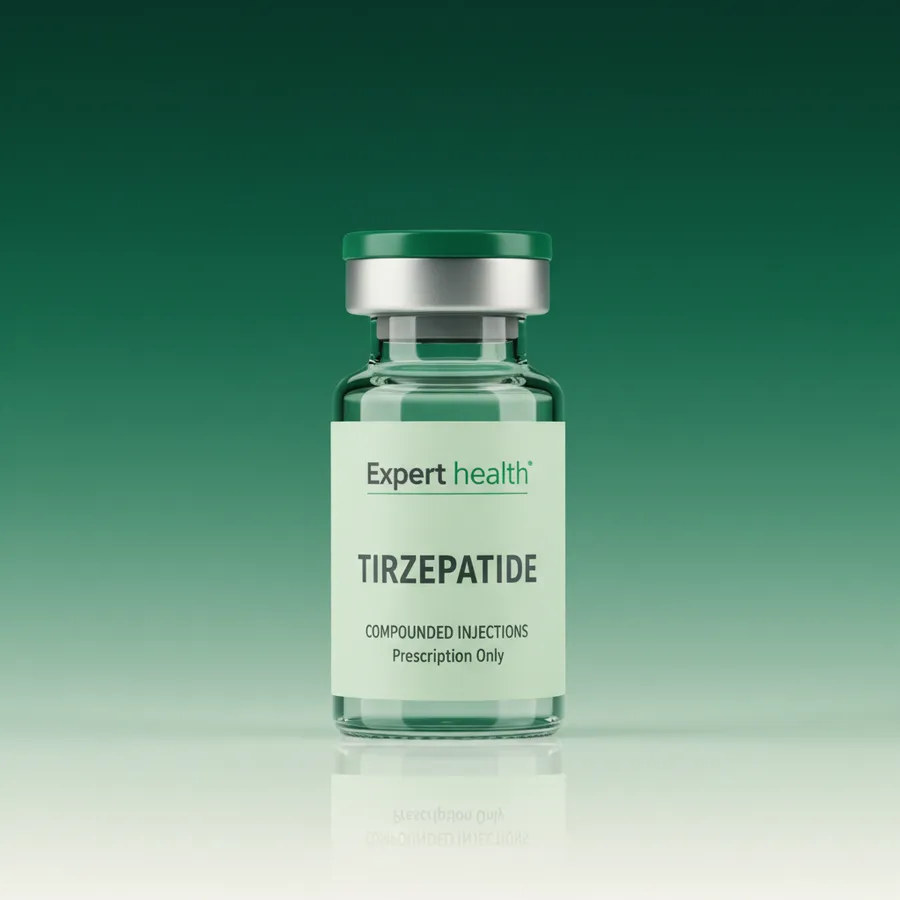
Product images are for illustrative purposes only. Actual medication vials, packaging, pharmacy labels and branding may vary. Expert Health facilitates access to care but does not compound, manufacture or dispense prescription medications. Medications are fulfilled by independent licensed pharmacies where legally permitted.
Start with Tirzepatide.
As low as $332/mo. Prescribed by a US-licensed provider, compounded by a licensed US pharmacy, and shipped free to your door.
See Tirzepatide and pricingNot sure it is the right fit? Speak with a health specialist, free, or browse all treatments.